
Columbus Aviators: A Strong Foundation
Average Attendance by Season: 2026: 10,362
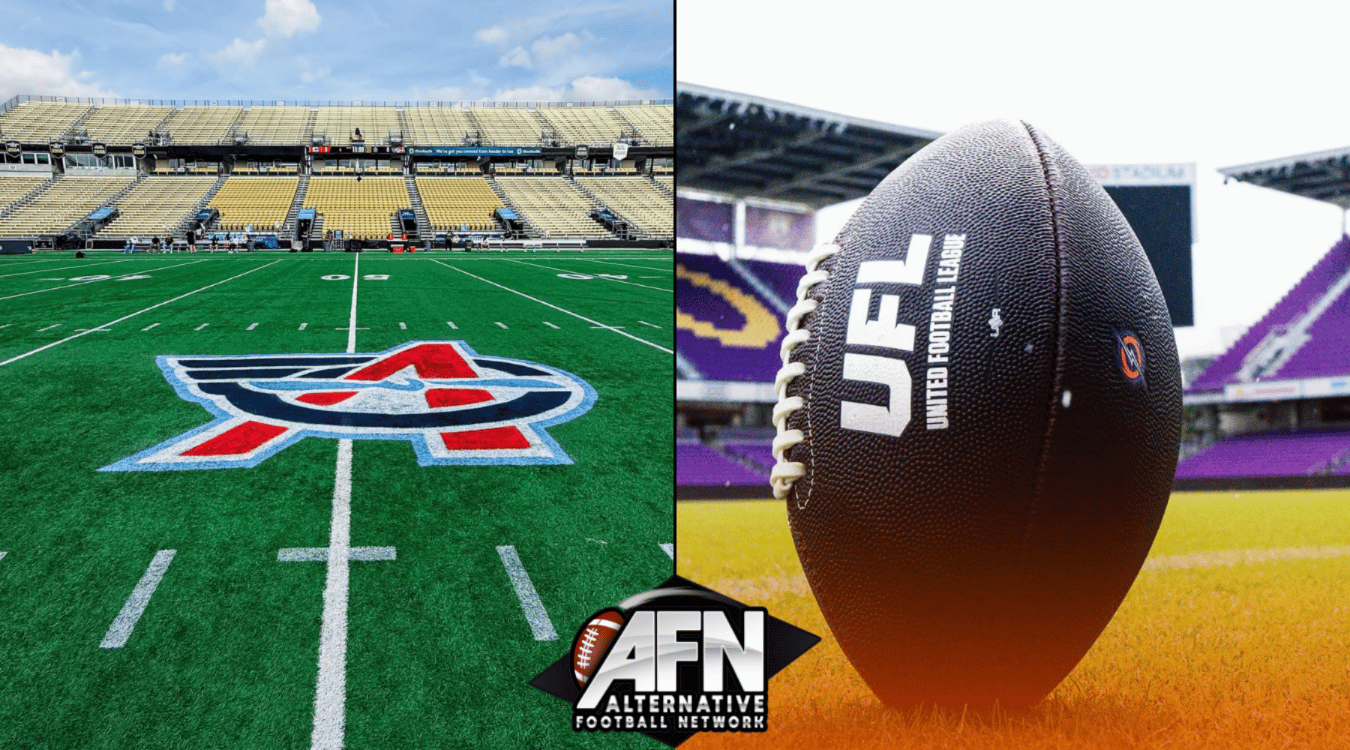
If there was one expansion market that immediately established its identity, it was Columbus. The Aviators finished among the league leaders in attendance during their inaugural season, proving that Historic Crew Stadium remains an excellent fit for spring football.
Part of that success came from a passionate supporter culture that developed before the team’s first game. One of the most recognizable fan sections was The Flight Decke, which was organized by a small group of dedicated UFL supporters, including Alex Maluchnik and longtime spring football fan “Ducky.”
We got Columbus comedian Alex to help us spread the word about the Columbus Aviator’s Flightdecke to the scholars of cbus!
— Flightdecke (@flightdecke) March 27, 2026
Hope to see you all at Combustion Brewery (Clintonville) this Sunday for the Flightdecke watch party and the debut of Pilot Light Lager! #UFL #cbus pic.twitter.com/Zp5N0jhbf1
According to Maluchnik, the idea was inspired by Columbus’ soccer tradition. “It was a nod to the Columbus Crew. When they played at this stadium, this was where their most ravenous fans sat. Carrying that torch, it was easy for everyone to get back into the groove. Those seats are baked in hunger for victory.”
👋👋👋 Dallas pic.twitter.com/EILoSlqgij
— Flightdecke (@flightdecke) April 18, 2026
Building the supporter section took months of planning between fans, the organization, and league officials. The group even established official away-game watch parties at a local brewery, which created a specialty Flight Decke beer for supporters.
The Aviators also benefited from something unique to central Ohio. “If you’ve ever spent time in the fall in central Ohio, you’d know the answer: THE Ohio State Buckeyes. This city lives and dies by its teams.”
That football culture gave the organization a strong foundation, but Maluchnik also credited the Aviators for embracing supporters from the beginning. The team welcomed fan-led tailgates, recognized supporters during games, and built relationships rather than trying to control the experience.
Looking ahead, he believes continued community outreach, particularly through local youth football, could help the franchise continue growing its footprint throughout central Ohio.
For a first-year expansion team, it’s difficult to ask for a much better start. Columbus already has a strong venue, an engaged supporter culture, and an organization that appears willing to work alongside its fans. If those relationships continue to grow, the Aviators should remain one of the UFL’s healthiest markets for years to come.
Orlando Attendance Up 3.5% From the XFL, but Down 53.0% From the AAF Peak
Average Attendance by Season: 2026: 9,244 | 2023 XFL: 8,931 | 2019 AAF: 19,648
Orlando was one of the UFL’s three expansion markets in 2026 and, overall, I’d consider the inaugural season a success. The Storm opened the year by drawing 11,172 fans before finishing with a respectable average of 9,244. While there is certainly room for growth, the franchise established a solid foundation in its first season.
One of my favorite additions was “The Storm Wall,” Orlando’s standing-room supporters’ section. It immediately reminded me of the Defenders’ Beer Snake section in DC and gave the Storm an identity of their own. Unfortunately, after the home opener, it didn’t receive nearly the same level of promotion. If the league is trying to build traditions around its new franchises, continuing to market unique fan experiences like The Wall should be a priority.
Storm nation, that was electric ⚡️
— Orlando Storm (@UFLStorm) March 30, 2026
Come out this weekend and support us again this Saturday as we take on the Louisville Kings at 8PM ET.
🎟️: https://t.co/IUII4IzDN1 pic.twitter.com/xvBjSUsY1t
Inter&Co Stadium is another major positive. It’s one of the newest and most attractive venues in the league, providing an intimate atmosphere that fits exactly what Mike Repole has said he wants for the UFL.
The scene is set. pic.twitter.com/OCDZ72Orem
— Orlando Storm (@UFLStorm) May 3, 2026
Orlando’s spring football history, however, helps explain why attendance remains a work in progress. The Orlando Apollos were arguably the AAF’s flagship franchise before the league folded midway through the 2019 season, averaging nearly 20,000 fans per game. Four years later, the XFL’s Orlando Guardians struggled on the field and averaged just 8,931 fans, making it difficult to build momentum in the market.
The “Orlando Special” ‼️
— Orlando Apollos (@aafAPOLLOS) February 10, 2019
🏹#TakeAim | #ORLvsATL pic.twitter.com/AiDcvILBF7
Repole’s decision to return to Orlando made sense, especially given his connections to Central Florida. The Storm rewarded that confidence by finishing with the league’s best regular-season record. Even so, averaging just over 9,200 fans for one of the UFL’s top teams stands out. Winning usually drives attendance, and while this was only Year One, there is still considerable room for growth.
The biggest difference this time is stability. Orlando spring football fans have experienced just about every scenario imaginable over the past several years. The AAF’s Orlando Apollos were one of the league’s biggest success stories before the league abruptly declared bankruptcy midway through the 2019 season. The Orlando Guardians returned in the XFL in 2023, only to see the team eliminated when the XFL and USFL merged into a single eight-team UFL, leaving four teams from each league behind. For the first time in years, however, there is a clear long-term vision. The Storm are part of that vision, and the organization now has the opportunity to build on the foundation established during its inaugural season.
I also want to recognize Storm Center’s Max Holbrook, who has supported spring football in Orlando from the Apollos to the Guardians and now the Storm. Fans like Max have remained committed through league closures, franchise relocations, and rebranding efforts. That kind of loyalty deserves recognition and speaks to the passionate fan base that still exists in Central Florida.
We got a new football team; Orlando Storm, games are at Inter&Co Stadium. GOOD HOOPS!! trust me march 29th home opener pic.twitter.com/nSEpLiyzXn
— Max Holbrook (@MaxHolbrookPFN) February 9, 2026
“The Orlando/Florida spring football fanbase has been through many devastating changes throughout the years,” Holbrook said. “The Orlando Storm attendance was something to be proud of. A very steady and consistent 9-10K is something to be proud of. It will only continue to grow with continuity throughout the years.”
Holbrook believes consistency is exactly what the market has been missing. “Many fans were skeptical about Orlando’s market for the third or fourth time,” he said. “No one wants to keep supporting a team that’s here for a year, then gone the next year. If fans see the Storm are still here and build that reputation as Orlando’s home football team, the fan base will keep growing.”
I couldn’t agree more. Orlando has never lacked football fans, it has lacked stability. If the UFL remains committed to the Storm, there’s every reason to believe this market can continue growing in the years ahead.
The Foundation for What’s Next
The first season in Orlando and Columbus was never going to answer every question about the UFL’s long-term future. Building a successful sports franchise takes time, and attendance alone doesn’t determine whether a market will ultimately succeed. What matters just as much is whether fans return, bring others with them, and continue building a connection with their team.
The conversations in this article show that both Orlando and Columbus have supporters who are excited about the opportunity to help shape the next chapter of spring football. They recognize that there is room for improvement, whether through stronger marketing, deeper community involvement, or a more consistent presence throughout the year. At the same time, they believe these markets have the potential to become lasting homes for the UFL.
The UFL made a significant investment by bringing teams to Orlando and Columbus. Whether those decisions prove successful will depend on more than attendance figures. It will depend on continued commitment from the league, support from local communities, and fans who are willing to grow the game one season at a time.
If these interviews demonstrate anything, it’s that optimism still exists. The supporters in Orlando and Columbus aren’t simply watching a new team take the field, they’re helping build something from the ground up. That process takes patience, but every lasting franchise begins with a fanbase willing to believe in what it can become.
