
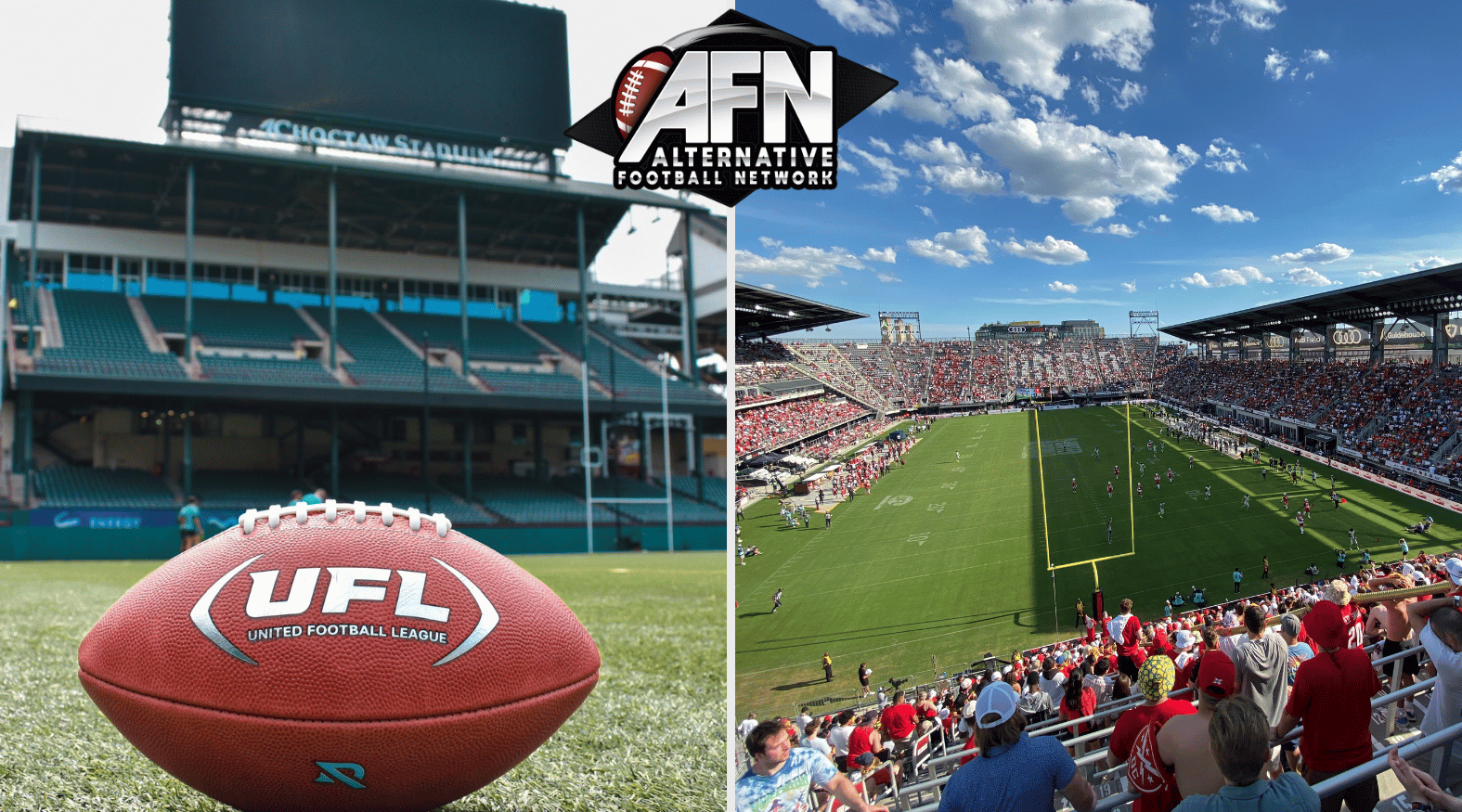
The XFL Teams Searching for Consistency
The two remaining original 2020 XFL franchises are searching for more consistent attendance, but for very different reasons.
Let’s start with the hometown team for the 2026 United Bowl, the D.C. Defenders. From 2020 through 2025, attendance generally remained between 13,000 and 16,000 fans per game. This season, however, that average dropped below 10,000. For one of the league’s most successful and recognizable franchises, that decline is at least worth monitoring. As I’ve mentioned throughout this series, one common theme from fans has been marketing. Many believe the UFL placed a greater emphasis on promoting its newer markets, something Mike Repole has since acknowledged by saying the league plans to increase its marketing efforts in returning cities.
Definitely agree, Shane.
— Repole Stable (@RepoleStable) July 24, 2026
The plan is to add more local marketing resources across all of our markets but St. Louis will receive even greater support.
We love playing in the Battle Dome, but we need to get attendance back to 30,000 fans.
I have tremendous faith and confidence… https://t.co/eZlR5iBh6h
Dallas presents a very different situation. Formerly based in Arlington, the franchise relocated to Frisco, creating the challenge of building a fanbase in a new city. While Frisco is only about 40 minutes from Arlington, that distance can still be enough to affect attendance, especially for fans who had grown accustomed to the team’s previous home. On top of that, ongoing renovations at Toyota Stadium have created another hurdle. Building a loyal fanbase in a new market takes time, and those factors have undoubtedly made the transition more difficult.
DC’s Attendance Has Declined Every Season Since 2020
Average Attendance by Season: 2026: 9,000 | 2025: 13,282 | 2024: 14,143 | 2023: 16,112 | 2020: 16,179
The Beer Snake Section has got to be the best seat in the house 🔥🐍@UFLDefenders #UFL | #AFN | #UFLBowl pic.twitter.com/yohChveLMn
— Alternative Football Network (@TheOfficialAFN) June 13, 2026
DC has been one of spring football’s flagship markets since the XFL returned in 2020. Audi Field hosted the league’s opening game that season, and the atmosphere immediately established the Defenders as one of the league’s premier franchises. From the Beer Snake to one of the loudest home crowds in spring football, DC quickly became a model market.
That makes the steady decline in attendance even more surprising.
The Defenders averaged just 9,000 fans per game in 2026, a 44.4% decrease from their 2020 average and their lowest attendance figure of the modern spring football era. What’s puzzling is that the decline hasn’t mirrored the team’s success on the field. DC captured the UFL championship in 2025, returned to the Championship Game in 2026, and has consistently fielded one of the league’s most competitive rosters.
To better understand why attendance has trended downward, I spoke with Dom from Defenders District, who believes the issue extends beyond Washington itself. “I think the declining attendance has more to do with spring football as a whole rather than any fault of the DC market. There is both a lack of novelty now that it’s been around, and a lack of consistency to bring confidence in supporting any team long term.”
It’s an interesting perspective. Since 2019, spring football has seen the AAF, the USFL, multiple versions of the XFL, and now the UFL. Even the league’s most successful markets have experienced league closures, mergers, franchise relocations, rule changes, and ownership changes. That uncertainty may make casual fans hesitant to invest in the long term.
Longtime superfan District Defender, who has attended games since the franchise’s inaugural season, remembers just how different the atmosphere felt in 2020. “The energy in Audi Field that first game ever. People were screaming on defense on first and second down. I’ve only ever heard that at a rivalry college game.”
“Today is about redemption.”
— DC Defenders (@UFLDefenders) March 8, 2020
The District Defender is in the house and fired up 🔥🛡 pic.twitter.com/vFSgMWinrZ
He also recalled that one of the league’s most recognizable traditions wasn’t planned by the organization; it happened naturally. “The Beer Snake happened organically.”
District Defender believes those unique traditions helped establish the Defenders’ identity, creating an atmosphere unlike anything else in spring football. He also emphasized that the league has always been about more than wins and losses.
Both interviews pointed toward many of the same reasons for the attendance decline. Dom believes converting casual fans into long-term supporters remains one of the league’s biggest challenges, while District Defender pointed to two major changes.
“The two biggest things that changed… were changing the time that the season starts and changing the name of the league.”
He believes beginning the season immediately after the Super Bowl helped keep football fans engaged, while the transition from the XFL to the UFL created confusion among casual supporters. “People would see me wearing Defenders stuff after we won the championship and say, ‘I thought the XFL was gone.'”
That comment reinforces one of the recurring themes I heard throughout this project: marketing and consistency remain critical to the league’s long-term growth.
Scheduling likely played a role as well. Several Defenders home games kicked off at noon on Saturdays this season, which may not have been the most fan-friendly window. While Dom acknowledged local marketing improved, he believes the challenge now is giving fans a reason to keep coming back year after year.
When asked what message he would send to league leadership, Dom emphasized one thing above everything else. “The people and the product have to always be put first, and everything else will fall into place if you can consistently put them first.”
District Defender shares that optimism, pointing to the league’s willingness to listen to fans and make changes. “He’s taking accountability and he’s changing things.”
Regardless of the attendance decline, DC remains one of the UFL’s cornerstone markets. Audi Field continues to provide one of the league’s best game-day environments, the Beer Snake has become synonymous with spring football, and the Defenders remain one of the UFL’s premier brands. If the league continues building on that foundation while providing the stability fans have been asking for, there’s every reason to believe Washington can once again become one of the league’s attendance leaders.
Dallas Renegades: Attendance Falls 33.9% After Move to Frisco
Average Attendance by Season: 2026: 6,449 (Toyota Stadium, Frisco) | 2025: 9,763 | 2024: 9,887 | 2023: 12,055 | 2020: 17,163 (2020 & 2023–2025: Choctaw Stadium, Arlington)
Here at Toyota Stadium in Frisco, Texas for the Houston Gamblers vs. Dallas Renegades UFL game. LET'S GO RENEGADES!!!!@UFLGamblers @UFLRenegades @TheUFL @The_UFM pic.twitter.com/mHPjkRVkYA
— AZ Intel | Personal (@Andreaz_Intel) March 28, 2026
The Dallas Renegades underwent one of the league’s most significant venue changes entering the 2026 season. After playing at Choctaw Stadium in Arlington since the XFL’s return, the franchise relocated to Toyota Stadium in Frisco. On paper, the move made sense. Toyota Stadium is a modern soccer venue that better aligns with Mike Repole’s vision of playing in smaller, more intimate stadiums.The challenge was geography.
While Frisco remains within the Dallas-Fort Worth metroplex, it is nearly 40 miles from Arlington. For many longtime Renegades fans, that represented a much longer drive than they had become accustomed to over the previous several seasons. Relocating a franchise within the same metropolitan area may not seem significant, but asking fans to establish new habits in a different city can be more difficult than it appears.
The attendance numbers reflected that challenge. The Renegades averaged just 6,449 fans per game in 2026, a 33.9% decline from the previous season and the lowest average in franchise history.
To better understand the decline, I asked Renegades fans what they believed contributed to the drop in attendance. While the move to Frisco was mentioned frequently, most fans agreed it was only one piece of a much larger picture.
Scheduling was the most common concern. Fans repeatedly pointed to the league’s Tuesday night game, Friday kickoffs, and the late release of the schedule as factors that made attending games more difficult. Others cited the longer drive for Arlington and Fort Worth supporters, saying the move naturally disrupted established tailgating groups and game-day traditions.
Communication with season ticket holders also emerged as a recurring theme. Several longtime supporters felt the organization had become less engaged throughout the season, with fewer check-ins from team representatives, limited season ticket holder perks, and fan events that were announced with little advance notice. As one fan put it, “The local marketing is more by the fans than the team.”
Many supporters emphasized that the issue wasn’t Toyota Stadium itself. Most described the venue as a good long-term fit for the league and appreciated the more intimate atmosphere. Instead, they believed stronger local marketing, greater community outreach, improved communication with season ticket holders, and expanded pregame activities such as tailgates and player appearances would do more to grow attendance than another change in venue.
One response particularly stood out. “It’ll take at least three seasons without major changes to the Renegades team before we get a major chunk of committed fans to stick around.”
That comment echoed one of the biggest themes I encountered while reporting this story: continuity matters. Building a loyal fan base takes time, and constant changes: whether they’re coaching staffs, venues, schedules, or league structure, make that process more difficult.
To be fair, Toyota Stadium was also undergoing extensive renovations throughout the season, limiting seating capacity and preventing fans from experiencing the venue in its finished form. That undoubtedly played a role, and 2027 should provide a much better indication of what the market is capable of once construction is complete.
Despite the disappointing attendance, I don’t view Dallas as a relocation candidate. The UFL’s league headquarters remain in Arlington, and maintaining a presence in one of the country’s fourth-largest media markets continues to make business sense.
Dallas has not yet reached its potential. If the organization can establish greater consistency, improve communication with its fan base, and continue investing in the game-day experience, there is every reason to believe attendance can rebound in the years ahead.
The Road Ahead: Searching for Momentum
The conversations in this article make one thing clear: attendance numbers only tell part of the story.
Both Dallas and D.C. have passionate supporters who continue showing up because they believe in spring football. Their experiences are different, but they share a common goal: seeing their teams and the league succeed. Whether it’s introducing new fans to games, supporting community events, or continuing to buy tickets through ups and downs, these fanbases are doing their part to help build something that lasts.
The challenges are real. D.C. has seen attendance decline from the heights of 2020 and 2023, while Dallas continues searching for the consistency needed to establish a larger following. Those numbers deserve attention, but they don’t define the commitment of the people who continue to support these teams every weekend.
One of the biggest takeaways from these interviews is that fans aren’t simply asking for bigger crowds. They’re asking for reasons to believe. They want stronger marketing, deeper community engagement, a better game-day experience, and a league that continues investing in its markets. Most importantly, they want stability. It’s difficult to grow a fanbase when uncertainty surrounds the future of spring football, but these supporters continue to believe that growth is possible.
The UFL has made it clear that it is committed to building a sustainable league. If that goal is going to become reality, markets like Dallas and D.C. will play an important role. Success won’t happen overnight, but neither fanbase has given up.
The fans featured in this article haven’t stopped believing in spring football. They’re still showing up, still spreading the word, and still hoping that the league’s best days are ahead. As long as that passion remains, there is every reason to believe these markets can continue building momentum and help shape the future of the UFL.
