
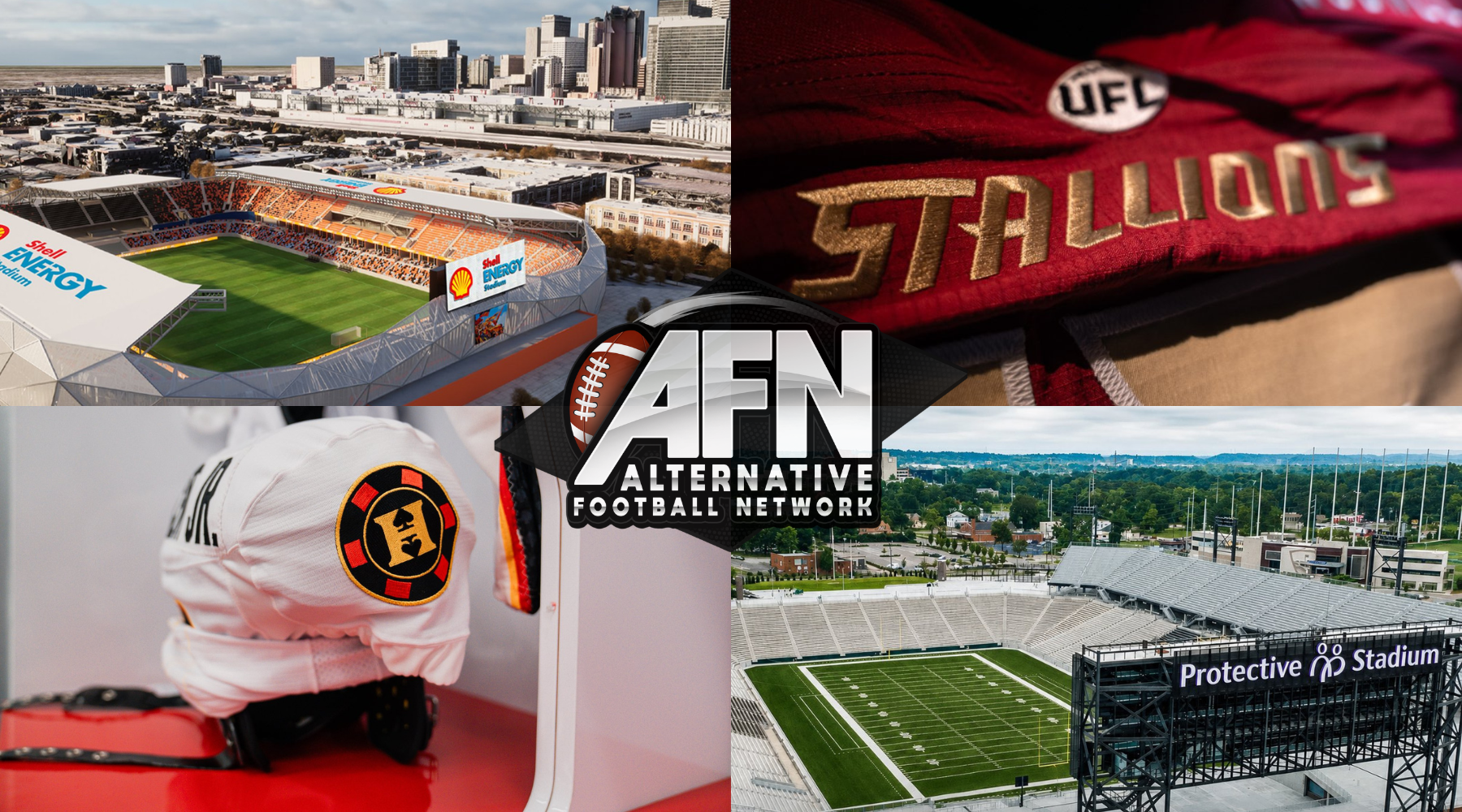
The 2026 UFL season marked one of the biggest turning points in modern spring football. After billionaire Mike Repole purchased a stake in the league in late 2025, sweeping changes followed. Memphis, Detroit, and San Antonio were relocated, while Louisville, Columbus, and Orlando entered the league as new markets. Since this article was originally written, the league has announced another round of relocations, with Birmingham and Houston also departing their respective markets, which we will get into soon.
Even before those latest announcements, however, Detroit and San Antonio stood out as two of the most surprising moves (Sorry Memphis).
Statement from the United Football League. pic.twitter.com/EIKHDcV3A1
— United Football League (@TheUFL) October 3, 2025
Detroit was the only returning UFL market to increase attendance in 2025. After averaging 8,134 fans per game in 2024, the Panthers jumped to 11,681 in 2025, including a crowd of more than 16,000 for their final home game. Had the Panthers remained in Detroit, that attendance figure would have ranked third in the UFL this season.
The Michigan Panthers closed out the #UFL season with over 16,000 fans – a new team record.
— James Larsen (@JamesLarsenPFN) June 2, 2025
After some questions heading into the year, this Michigan fanbase showed out – establishing themselves as one of the UFL's strongest markets heading into 2026:https://t.co/HZywfG6Ady
San Antonio was already a proven spring football market long before the UFL arrived. The AAF’s Commanders averaged 27,720 fans across four home games in 2019. When the XFL returned in 2023, the Brahmas opened with more than 24,000 fans against St. Louis and finished the season averaging 14,983. Attendance dipped to 11,887 in 2024, but even that figure would have ranked second in the UFL in 2026.
Part of me will always have a place for Detroit and San Antonio in the UFL. The numbers suggest that, had the league found a way to keep those franchises in their respective markets while moving to smaller, more cost-effective venues, both fan bases would have continued to support their teams. Instead, the relocations understandably frustrated many loyal supporters, some of whom have said they no longer follow the league.
Not everyone walked away.
One fan who has continued supporting the league is Brahma Babe, one of the UFL’s most recognizable supporters. Even after San Antonio lost its team, she has continued traveling to games across the league because, as she put it, “supporting the UFL is about more than one team.”
Gameday Highlight 🏈… I felt like the Queen of the Beer snake. Ty my @UFLDefenders Brothers for the chance to climb the podium and present my golden cup. 🩶🏈🖤🏈🛡️❤️🍺🐍🍋 #TravelinBabe #UFLESF #UnitedBowl #beersnake pic.twitter.com/IpOw6pNt7z
— Brahma Babe (@SA_BabeBrahma) June 15, 2026
“I love football, and I believe spring football deserves a strong, lasting place in the sports landscape,” she told me. “Losing the Brahmas was tough, but staying engaged is my way of showing that San Antonio, and fans like us, still matter.”
Her perspective reflects the difficult balance the league faces. Fans invest their time, money, and emotions into their local teams, making relocation deeply personal. Yet she believes that if spring football is going to survive, supporters also have a role to play.
“I understand the frustration,” she said. “When a team leaves, it feels personal because fans invest their time, money, and heart into it. But walking away completely only makes it harder for those markets to come back. If we want spring football to survive and grow, the best thing we can do is keep showing up.”
That passion has taken her far beyond San Antonio. She has traveled to support teams across the league, something she describes as one of the most rewarding parts of being a UFL fan.
“You meet fans who care deeply, staff who work incredibly hard, and communities that want this league to succeed,” she said. “The UFL fanbase may be smaller than other major leagues, but the passion is real, and it is powerful.”
So met a few cool guys last night :). It was great meeting you Mike @RepoleStable & John @BarstoolGruden at one heck of a game.Ty for the kind words, let’s keep this UFL ride going! 🩶🏈🖤. See y’all at the United Bowl! #TravelinBabe #TravelinBro #UFLStadoumTour26 pic.twitter.com/1BY9Dxdofp
— Brahma Babe (@SA_BabeBrahma) May 23, 2026
From a business standpoint, the league’s reasoning is understandable. Operating costs at Ford Field and the Alamodome were almost certainly much higher than they are at Lynn Family Stadium, Historic Crew Stadium, and Inter&Co Stadium. Cost control is essential for a league still working toward long-term stability, and those moves likely improved the UFL’s financial outlook. The same business reality likely played a role in the recent decisions involving Birmingham and Houston.
That doesn’t mean fans have to like those decisions.
Relocations are never just about balance sheets or stadium leases. They affect the people who bought season tickets, wore the jerseys, introduced friends and family to spring football, and believed their city deserved a team. Those supporters are what give a league its identity, and their disappointment is understandable.
I still hope Detroit, San Antonio, Birmingham, and Houston all return to the UFL someday. Each market has demonstrated, in its own way, that there is an audience for spring football. Whether that happens remains to be seen, but for now, the UFL has committed to a new direction. As this league continues to evolve, I hope it never loses sight of the communities that helped keep spring football alive in the first place.
Attendance figures throughout this article are based on officially announced attendance compiled by Kenn Tomasch’s Sports Attendance Database and publicly available league records.
Another Wave of Change: Birmingham and Houston Relocated
The United Football League today announced the difficult decision to depart Birmingham and Houston as part of its strategic market realignment and long-term growth strategy.
— United Football League (@TheUFL) July 30, 2026
Read more: https://t.co/HLtL30ZizI pic.twitter.com/5KpzszWWOu
Writer’s Note: This article was written before the UFL announced the relocations of the Birmingham Stallions and Houston Gamblers.
Another offseason, another heartbreaking chapter for spring football fans. Unfortunately, this has become one of the hardest realities of supporting a spring league.
The Birmingham Stallions were spring football royalty and will be deeply missed. It’s incredibly unfortunate that it has come to this. Birmingham consistently delivered the league’s strongest local television ratings, and while attendance was never its greatest strength, the UFL relies heavily on television audiences and advertising revenue. The Stallions’ three consecutive championships cemented their place in spring football history, and Skip Holtz’s legacy will not be forgotten.
Houston’s story is just as heartbreaking. In 2020, the Roughnecks were undefeated behind a superstar season from P.J. Walker before the COVID-19 pandemic abruptly ended the season. In 2023, Wade Phillips led the Roughnecks to the playoffs with a winning record. Then came the USFL-XFL merger. While the Houston Roughnecks name remained, the 2023 Roughnecks roster and coaching staff moved to the San Antonio Brahmas, while the Houston Gamblers inherited the Roughnecks identity. The franchise struggled through the 2024 and 2025 seasons under head coach Curtis Johnson. After Mike Repole invested in the league, the team was rebranded back to the Gamblers, creating yet another identity change for fans.
After years of rebrands, roster overhauls, and stadium changes, it’s understandable why many Houston fans found it difficult to fully invest in the team. For some, it became hard to even know which franchise they were supporting.
From a business standpoint, I understand why the league made these decisions. From a fan’s perspective, it’s frustrating. My heart goes out to the supporters in Birmingham and Houston who invested their time, money, and passion into these teams, only to see them relocated. Hopefully, Birmingham will one day return to the UFL if a suitable smaller stadium becomes available.
Birmingham Stallions: Attendance Down 19.6% Since 2024
Average Attendance by Season: 2026: 8,248 | 2025: 9,149 | 2024: 10,260 | 2022/2023: N/A (USFL hub model; attendance not officially tracked)
Birmingham Stallions average attendance per game was 10,255 in 2024 and 8,794 in 2025.
— BirminghamSports (@BirminghamSport) April 18, 2026
Great crowd this afternoon at Protective.
People still making their way in. #GiddyUp pic.twitter.com/vtkIKckXFD
The Birmingham Stallions remain the modern dynasty of spring football. Since returning in 2022, they have won three consecutive championships and have become one of the UFL’s most recognizable franchises. Despite that success, attendance continued to trend downward in 2026.
One important note is the season opener. Birmingham drew a franchise-record crowd of 18,340 fans with rapper Gucci Mane performing before kickoff. It was one of the league’s best atmospheres of the season and demonstrated the market’s potential. However, removing that opener from the equation paints a different picture. The remaining home games averaged just 5,726 fans.
That’s a number the league will undoubtedly want to improve.
Throughout the past few seasons, many Birmingham fans have voiced frustration over kickoff times, scheduling, and the challenges of following a team that still practices in Arlington under the UFL’s hub model. Yet whenever rumors surfaced that the Stallions could relocate, the fan base rallied behind the franchise, showing just how much spring football still means to the city. That passion is clearly there. The challenge now is turning that passion into more consistent attendance throughout the season.
To gain additional perspective, I spoke with Graham Gwaltney, founder of UFL Update on Instagram and X, and a longtime Stallions supporter. Rather than focusing solely on attendance, Gwaltney believes Birmingham should be evaluated using a broader set of metrics.
Taken just after kickoff.
— United Football Update (@unitedfootballu) April 18, 2026
Well done Birmingham 👏 pic.twitter.com/MbQubKPBUC
“When taking all the metrics into account, Birmingham has one of the best fan bases in the UFL,” Gwaltney said. “The unfortunate issue is they have the worst venue optics-wise for the league.”
It’s a compelling argument.
Protective Stadium seats more than 45,000 fans, meaning even respectable crowds can appear sparse on television. Gwaltney also noted that Birmingham consistently performs well in local television ratings despite being a significantly smaller media market than Houston, Dallas, or Washington, D.C. In his view, evaluating the Stallions solely on attendance ignores the franchise’s overall value to the league.
He also believes the organization can do a better job reaching fans beyond Birmingham itself. While the Stallions have established a strong presence within the city, expanding marketing and community outreach into surrounding suburbs and neighboring communities could help strengthen attendance moving forward.
“The Stallions reach the city of Birmingham well, but do a poor job in the surrounding suburbs and cities.”
I think that’s fair criticism. The fan base has repeatedly shown it will support spring football, but continuing to build relationships throughout central Alabama could help turn occasional fans into regular attendees.
There are also reasons for optimism. Weather is always a factor in Alabama, particularly during late spring when temperatures rise and afternoon storms become more common. The league’s planned move to an earlier schedule in 2027 could help alleviate some of those challenges while also giving the organization a chance to build momentum earlier in the year.
Ultimately, though, the league and the Stallions organization must continue finding new ways to connect with fans throughout central Alabama. A three-time champion should consistently draw larger crowds than what Birmingham saw in 2026. Attendance remains an area for improvement, but it should be evaluated alongside television ratings, brand recognition, and on-field success.
As Gwaltney put it: “Justifying a move because ‘attendance is dropping’ or ‘the fanbase doesn’t care’ isn’t a fair or valid point, especially when you put it in the greater context of the UFL as a whole.”
Houston Attendance Stabilizes in 2026, but Remains Well Below Previous Levels
Average Attendance by Season: 2026: 5,683 (Shell Energy Stadium) | 2025: 5,712 (TDECU Stadium) | 2024: 7,056 (Rice Stadium) | 2023: 12,066 (TDECU Stadium) | 2020: 18,230 (TDECU Stadium)
Houston PA announcer introduced the Stallions to the My Little Pony song. That’s just hilarious. #UFL pic.twitter.com/lo1BnuOsO5
— Anthony Miller (@ByAnthonyMiller) April 5, 2026
Houston has quietly become one of the UFL’s most puzzling markets.
The city has a rich spring football history. The Roughnecks led the XFL in attendance before the pandemic abruptly ended the 2020 season, and the original USFL Gamblers remain one of the league’s most recognizable brands. Yet despite that history, attendance has steadily declined over the past several years.
2020-2-8 Los Angeles Wildcats @ Houston Roughnecks (XFL Week 1)
— UFL FANS (@UflFans) February 9, 2026
( Yesterday )
Credit On this day in professional football history#UFL #xfl pic.twitter.com/CyXV0emHJe
The Gamblers averaged just 5,683 fans per game in 2026, essentially unchanged from 2025 but down nearly 69% from Houston’s 2020 XFL average.
To better understand why, I asked Houston fans what they believed was driving the decline. While opinions varied, several themes consistently emerged.
Longtime superfan Odin Sleipnir, known throughout the league alongside his wife as “The Predator Couple,” has supported Houston through multiple leagues, stadiums, and identities. In 2024, the pair traveled to all 10 Roughnecks games, becoming two of the league’s most recognizable supporters. For Odin, the league has always been about more than the logo on the helmet.
“The players are playing for that second chance or that last chance. The closeness between the fans and the players, and the accessibility we have to them, makes it more exciting and makes you want to be there.”
When asked why attendance has declined, Odin immediately pointed to one word: stability.
“COVID killed the momentum. Then came the move from TDECU Stadium to Rice Stadium, back to TDECU Stadium, and now to Shell Energy Stadium. Then the change from the Roughnecks to the Gamblers. It all boils down to a complete inconsistency to gain fans’ trust and show a stable market in Houston.”
That idea echoed throughout many of the responses I received.
The most common complaint was the schedule. Fans repeatedly pointed to the league’s later spring calendar, saying afternoon games in Houston’s heat make attending difficult. Many advocated for an earlier February start, later evening kickoffs, and avoiding holidays such as Easter and Mother’s Day.
Marketing was another overwhelming concern. Numerous supporters said the league and local organization simply are not visible enough throughout the Houston area. Several compared the current approach to the XFL’s 2020 launch, when local radio stations, television personalities, coaches, and league executives actively promoted the Roughnecks throughout the city.
Odin agreed, saying local marketing remains one of the organization’s biggest opportunities. “There are countless times we run into people who ask, ‘Who are they?’ or ‘We still have a team?’ There needs to be more television coverage, more local advertising, and in a city like Houston, billboards matter because people spend so much time in traffic.”
Brand consistency also surfaced throughout nearly every response. While fans were divided over whether they preferred the Gamblers or Roughnecks identity, most agreed on one thing: the constant changes have made it difficult for casual fans to stay engaged.
As one supporter simply put: “They need to pick one and stick with it.”
Odin shared a similar perspective. “Personally, I would’ve stayed with the Roughnecks. But as true fans of the league, we’re league first, city second. Once the league has cemented a solid foundation, then we’ll become city first, league second.”
Interestingly, Shell Energy Stadium itself was not viewed as the primary issue. Many fans praised the stadium’s intimate atmosphere and believed it fits the UFL’s long-term vision. Others argued an indoor venue or suburban location could make games more accessible, but there was no clear consensus. The larger concern was creating a better overall fan experience through stronger local marketing, community events, player appearances, and deeper engagement with season ticket holders.
Several fans also emphasized the importance of building a stronger local identity by featuring more Houston-area players and increasing the organization’s presence within the community throughout the year.
One comment summed up the overall feeling particularly well: “The game-day experience is good. The problem is people don’t know we have a team.”
That may be Houston’s biggest challenge.
Unlike some markets, this doesn’t appear to be a problem with the product on the field or even the venue itself. Instead, fans repeatedly pointed to awareness, consistency, and community engagement. Odin remains confident the market can rebound if given enough time.
“Don’t just give up on Houston. We were averaging 12,000 to 13,000 fans a game before. We can get back there; we just have to gain back that trust and show stability. We’re here for the UFL. We’re here for the players. We’re here to be super fans.”
The Fans Who Made It Matter: What the UFL Can’t Relocate
What these interviews show more than anything is that spring football has never just been about wins and losses. It’s about the communities that rally behind these teams, the traditions they build, and the memories they create. Birmingham and Houston fans invested years of their time, money, and passion into their franchises through league shutdowns, mergers, rebrands, coaching changes, and uncertainty. They kept showing up because they believed in their teams and believed spring football had a future.
From a business perspective, the UFL’s decision to relocate these teams may ultimately prove to be the right one. The league has to make decisions it believes will strengthen its long-term future. But understanding the business side doesn’t erase what these fanbases have lost. For Birmingham and Houston supporters, this wasn’t just the relocation of a football team. It was the loss of a community, a tradition, and something they had invested in for years.
Reading through these interviews, one thing became clear: these fans weren’t fair-weather supporters. They celebrated championships, endured losing seasons, defended the league when others doubted it, introduced friends and family to games, and continued to believe that spring football could succeed. Many of them watched their teams through multiple identities, ownership changes, league restructures, and stadium moves. Their commitment never wavered, even when the future often seemed uncertain.
My hope is that these interviews serve as more than a snapshot of attendance numbers or relocation decisions. They preserve the voices of fans whose stories deserve to be told. Too often, relocation conversations focus on markets, revenue, television ratings, and financial projections. Those discussions matter, but they don’t capture the people who filled the stands, wore the jerseys, traveled to away games, or built friendships because of these teams.
Whether Birmingham eventually returns to the UFL or Houston once again gets another opportunity, these fanbases have already left their mark on spring football. The Stallions built one of the greatest dynasties the modern spring game has ever seen, while Houston fans remained loyal through some of the most turbulent years any franchise has experienced. Those accomplishments and that dedication deserve to be remembered.
The stories shared in this article represent the heart of what made the Stallions and the Houston franchise, whether as the Roughnecks or the Gamblers, so special. Teams can relocate, names can change, and leagues can evolve, but the passion of the people who supported them cannot be relocated. That is the legacy Birmingham and Houston leave behind, and it will always be part of the history of spring football.
