
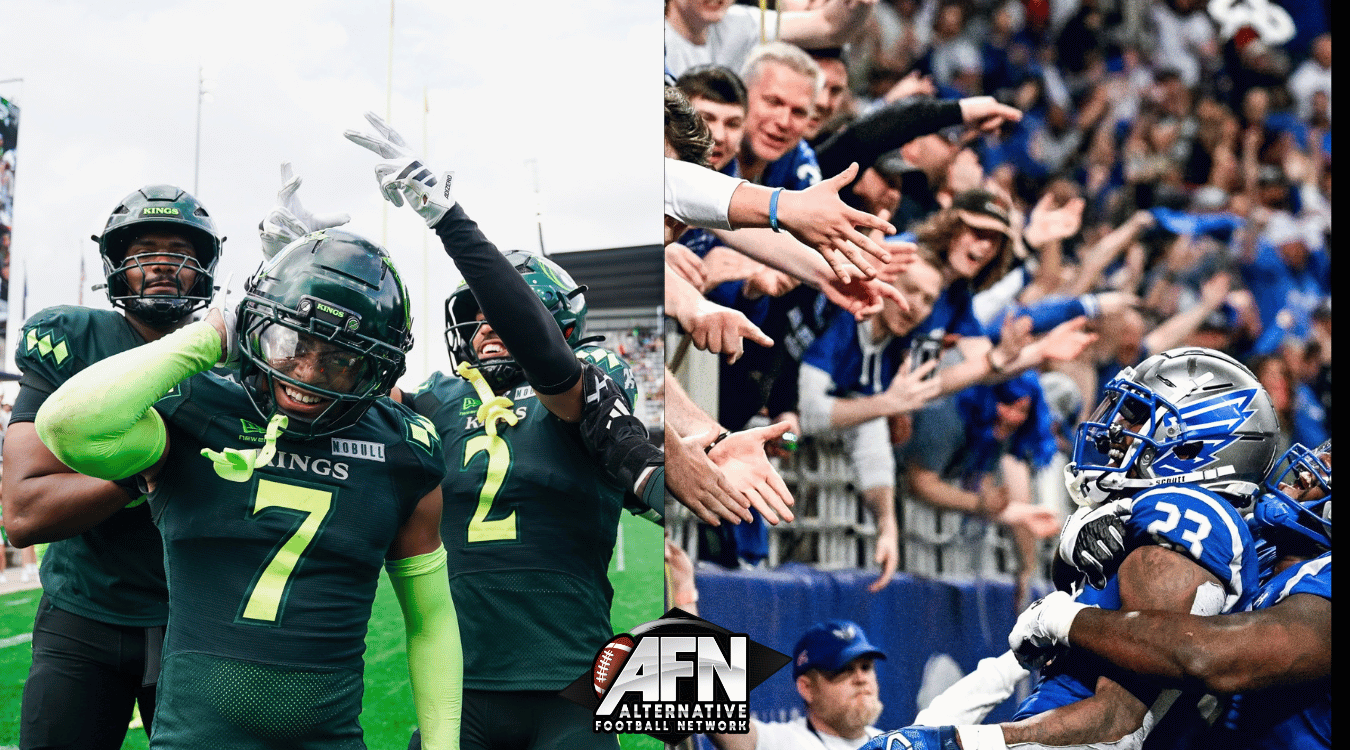
Louisville Kings: A Home Run in Year One
Average Attendance by Season: 2026: 11,195
If there was one expansion market that exceeded expectations, it was Louisville.
The Kings finished second in the UFL in attendance during their inaugural season while also capturing the league championship. That’s about as successful a first year as any expansion franchise could hope for.
I had the opportunity to attend a game at Lynn Family Stadium this season, and it immediately became one of my favorite venues in the league. The stadium is modern, intimate, and creates an outstanding atmosphere for spring football. More importantly, the fans were fully invested. From kickoff until the final whistle, it was clear Louisville had embraced its new team.
It’s a Kings game day 👊
— Lynn Family Stadium (@lynnfmlystadium) May 16, 2026
Kickoff is scheduled for 12 p.m. Follow @UFLKings for any weather-related updates! pic.twitter.com/HNHI2s4Lx7
To better understand why the Kings found immediate success, I asked supporters from across Kentucky what made the franchise resonate so quickly. Their responses shared several common themes.
Many pointed to Kentucky’s deep football culture and the fact that, for the first time, the Commonwealth had a professional football team to rally around. Instead of dividing fans between the University of Louisville, the University of Kentucky, Western Kentucky, Eastern Kentucky, and other in-state programs, the Kings have given football fans a single team to support at the professional level.
Another recurring theme was head coach Chris Redman. His ties to Louisville immediately gave the organization credibility and helped establish a local identity before the team ever took the field. Fans also consistently praised Lynn Family Stadium, describing it as the perfect size for the UFL. The intimate setting, standing supporters’ section, and close interaction with players and coaches created a game-day atmosphere that many felt larger stadiums simply cannot replicate.
KING OF KINGS 👑
— Louisville Kings (@UFLKings) December 30, 2025
Louisville legend and former NFL quarterback Chris Redman has been named Head Coach of the Kings! pic.twitter.com/eRfpvIUTEu
Affordability also played a major role. Several fans highlighted the reasonable ticket prices, giveaways, and fan engagement as reasons they continue attending games. One season ticket holder described the experience as “minor league pricing, major league product,” while another said the Kings had become “one professional team that represents all of Kentucky.” That sentiment appeared repeatedly throughout the responses I received and may be the biggest reason Louisville succeeded so quickly.
Like any first-year franchise, there is still room for improvement. Fans suggested lowering some reserved-seat prices, improving concession pricing, and continuing to educate new supporters on UFL rules. Those are relatively minor concerns compared to the strong foundation the organization has already established.
There is still room to grow, but I have very few concerns about this market. If the Kings continue winning and the organization remains active throughout the community, I could easily see attendance climbing into the 12,000-13,000 range over the next few seasons. Louisville has all the ingredients to become one of the UFL’s flagship franchises, and Year One showed exactly why the league was confident in bringing professional football to Kentucky.
St. Louis Remains the League’s Attendance Leader Despite a 23.5% Decline
Average Attendance by Season: 2026: 22,384 | 2025: 29,259 | 2024: 33,677 | 2023: 35,104 | 2020: 28,541
Home playoff game in St Louis and can't break 20k is something 🧐 #UFL pic.twitter.com/WOsIuMLCmJ https://t.co/envwJEgSBv
— United Football Media (@The_UFM) June 8, 2026
From the XFL’s return in 2020 through the 2026 UFL season, St. Louis has consistently been the gold standard for spring football attendance. Even with a significant decline this season, the Battlehawks still led every UFL market in average attendance. However, the numbers also tell a concerning story. Attendance has fallen from a peak of 35,104 in 2023 to 22,384 in 2026, a 36.2% decline over the past three seasons.
Even a 23.5% drop from 2025 is likely not what the league envisioned for its flagship franchise. One of the biggest reasons Mike Repole invested in the UFL was because of what St. Louis represented. He has compared the Battlehawks to the Dallas Cowboys, calling them the UFL’s version of “America’s Team.” When your marquee franchise experiences that kind of decline, it’s worth asking why.
never a doubt. pic.twitter.com/pVksLoBnm1
— St. Louis Battlehawks (@BattlehawksUFL) April 7, 2024
To better understand the decline, I asked Battlehawks fans what they believed contributed to the drop in attendance. While opinions varied, several themes consistently emerged.
The most common concern was scheduling. Many fans pointed to the league’s late schedule release, multiple Friday night home games, and conflicts with Cardinals, Blues, and St. Louis City SC games. Others argued that the league’s original February start in 2020 created a better environment by capitalizing on football fans immediately after the Super Bowl before the city’s sports calendar became crowded.
Another recurring concern was the overall fan experience. Several season ticket holders expressed frustration over pricing, limited membership benefits, parking costs, traffic around The Dome, and inconsistent communication from the league. Others noted that purchasing tickets on the secondary market was often less expensive than renewing season tickets, reducing the incentive to remain season ticket holders.
Fans also pointed to concerns surrounding the league itself. Franchise relocations, annual rule changes, and questions about long-term stability were all mentioned as factors that may have affected casual fan interest. Others believed the novelty of the Battlehawks has naturally worn off after six seasons, while some pointed to the team’s repeated playoff exits and inconsistent quarterback play as reasons enthusiasm has cooled.
Economic conditions were another recurring theme. Rising costs have forced many families to reduce discretionary spending, making sporting events one of the first expenses to be cut.
Not every fan agreed that attendance should be the league’s top priority, however. Several pointed out that television revenue, not ticket sales, is what largely funds the UFL. They argued that while Friday night games may reduce attendance, they often provide stronger television windows for FOX and ABC/ESPN, ultimately benefiting the league financially. Others noted that because many UFL teams share venues with MLS, USL, and NWSL clubs, the league has limited flexibility when creating its schedule. Waiting for those leagues to release their schedules may be frustrating for fans, but it is often unavoidable.
I believe there is truth on both sides. Repole joined the league late in the summer of 2025, leaving only a few months to relocate three franchises, secure new stadium agreements, finalize schedules, hire staff, and prepare for kickoff. It’s possible much of the league’s attention shifted toward launching its new markets, leaving less time to market existing franchises like St. Louis.
One of the biggest changes was visual. In previous seasons, The Dome routinely looked packed on television and created one of the best atmospheres in spring football. This year, there were noticeably more empty seats, changing the look and feel of Battlehawks home games.
That also raises another question Repole himself has discussed: should the Battlehawks eventually move from The Dome to Energizer Park? A smaller venue would almost certainly create a fuller-looking stadium on television while reducing operating costs. From a business perspective, the idea makes sense.
Ready for the weekend 🏟️ pic.twitter.com/9GcMyEuqFk
— Energizer Park (@Energizer_Park) October 17, 2025
At the same time, The Dome carries enormous significance for football fans in St. Louis. It was home to the Rams’ “Greatest Show on Turf,” including Head Coach Ricky Proehl’s iconic game-winning touchdown in the 1999 NFC Championship Game. The Battlehawks have also built their identity there over the past several years. Moving the team would save money, but it could also mean leaving behind some of the history and atmosphere that helped make St. Louis the face of modern spring football.
Happy Birthday Ricky Proehl
— Old Time Football 🏈 (@Ol_TimeFootball) March 7, 2025
1999 NFC Championship#Rams #Buccaneers
Warner lofts a pass to @RickyProehl who makes a great catch for the winning touchdown
11-6 #Rams
pic.twitter.com/7vicJ0glAI
One thing remains certain, St. Louis is still the league’s premier attendance market. If the UFL wants to restore those crowds closer to where they were in previous seasons, continued investment in marketing, communication, and fan engagement will be essential heading into 2027.
