
THE NEXT CHAPTER OF THE UFL IS HERE!
— United Football League (@TheUFL) September 23, 2026
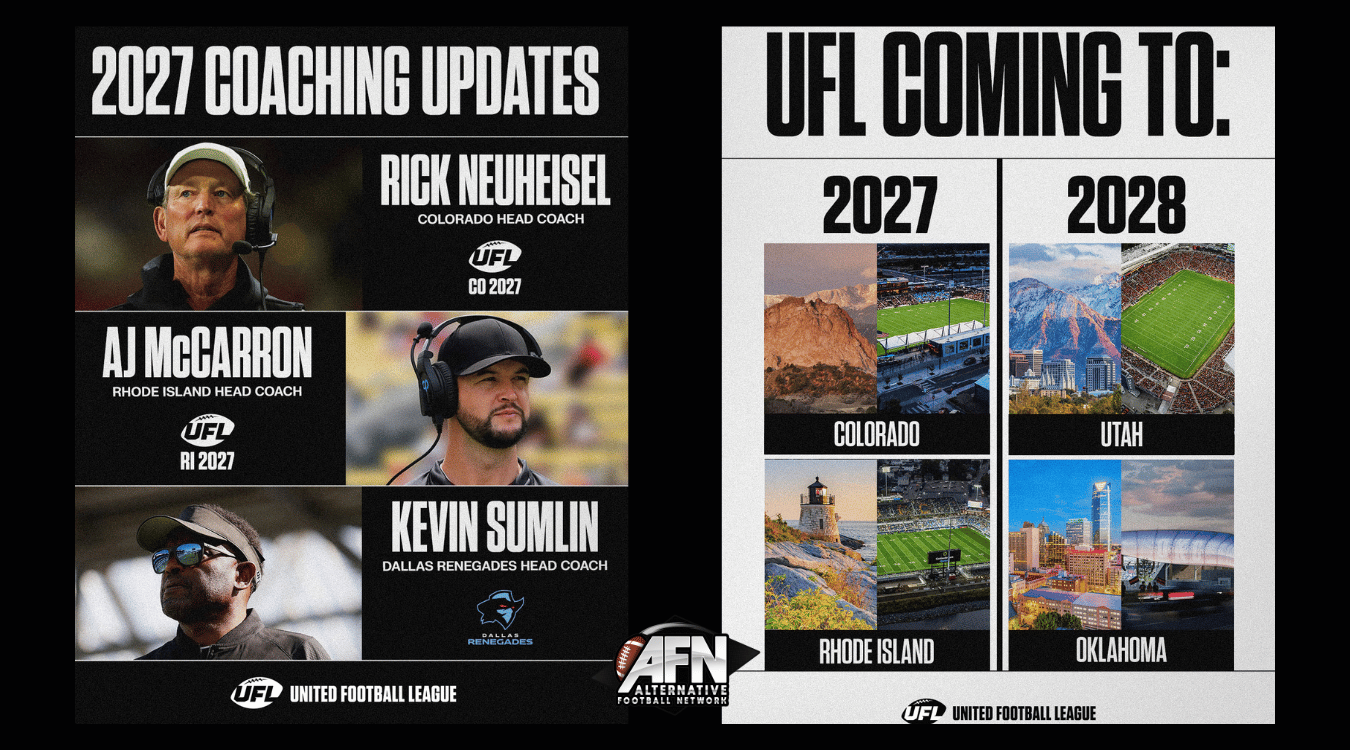
The UFL has announced plans for Colorado, Rhode Island, Utah, and Oklahoma teams! pic.twitter.com/zrKNy6lp8E
The UFL is making some major changes heading into the next few seasons, with two new markets joining in 2027 and two more in 2028. Birmingham and Houston are losing their markets, while Pawtucket, Rhode Island, and Colorado Springs will bring spring football to new areas. Oklahoma City and Utah will follow in 2028. I have some thoughts on all four markets, including the potential, the concerns, and what these moves could mean for the future of spring football.
Pawtucket, Rhode Island
Rhode Island, we found our home 🏟️
— UFL Rhode Island (@UFLRhodeIsland) September 23, 2026
Spring football is coming to Centreville Bank Stadium. pic.twitter.com/ZX161y7jSc
One move that surprised me was Rhode Island (New England was mentioned), but the more I look into it, the happier I am with the decision. The reaction from Rhode Island fans has been very positive, and people seem genuinely excited about bringing spring football to the area. The team will play at Centreville Bank Stadium, a brand-new stadium that opened in 2025 with a capacity of around 10,500 fans. This follows Mike Repole’s approach of using smaller stadiums to create a better atmosphere.
RHODE ISLAND, YOU'RE INVITED ‼️
— UFL Rhode Island (@UFLRhodeIsland) October 14, 2026
Join us October 18th from 2–6 PM at Centreville Bank Stadium as we reveal the name, logo and identity of Rhode Island's NEW UFL team!
Meet Head Coach AJ McCarron and players, win prizes, grab exclusive swag and be part of history.
RSVP HERE:… pic.twitter.com/en1bsHoDYM
The team’s identity is set to be unveiled on Sunday, October 18, at the stadium, with head coach AJ McCarron expected to be part of the event.
From a TV market perspective, this move makes a lot of sense. While Birmingham has more television households than Providence on its own, Rhode Island puts the UFL within reach of the Hartford–New Haven and Boston–Manchester markets. Combined, these three markets have around 4.3 million television households, giving the league a much larger regional audience than Birmingham alone. With the possibility of a future team in Queens, as Repole has previously mentioned, the UFL could also create an instant regional rivalry along with the DC Defenders.
I also have to talk about Birmingham. The Stallions were the true dynasty of spring football in the 2020s, winning championships in both the USFL and UFL. However, attendance never consistently matched their success, and playing in a massive stadium like Protective Stadium didn’t help. The Stallions will be missed, and I hope Birmingham can eventually get a smaller stadium that gives the team a chance to return. In my eyes, Birmingham will always belong in spring football. I hope the city continues to support the sport, but I also understand if fans are frustrated. I just hope they don’t root against the league’s success, because a successful UFL could eventually create another opportunity for Birmingham.
Colorado Springs, Colorado
OUR HOME IS SET! 🏟️
— UFL Colorado (@UFLColorado) September 23, 2026
Colorado football is coming to Weidner Field in 2027! pic.twitter.com/7qbsdKeInI
Colorado Springs was another surprise because I don’t remember it being seriously discussed as an expansion or relocation market. This is a sneaky move that could work out well for the UFL, especially as the league continues to expand westward with Utah joining in 2028.
The Colorado team will play at Weidner Field in downtown Colorado Springs. With a seating capacity of around 8,000, it will be the smallest stadium in the UFL. That could concern some fans, but it follows Repole’s strategy of using smaller venues. Having 5,000 fans in an 8,000-seat stadium is a much better look than having 5,000 in a stadium with more than 20,000 seats, like Houston’s former home.
COME JOIN US!
— UFL Colorado (@UFLColorado) October 6, 2026
RSVP HERE: https://t.co/9z2py55oaS pic.twitter.com/KaSX1P26oq
The team’s identity is set to be unveiled on Sunday, October 25, at the stadium.
From a television standpoint, Colorado Springs is a smaller market than Houston. However, being around 70 miles from Denver gives the UFL an opportunity to reach a much larger regional audience. Houston has the advantage in local market size, but Colorado Springs could help the league establish a presence in a new region and attract fans who may not have followed spring football before.
Houston is a painful story for many fans. The city went from the Roughnecks to the Gamblers, back to the Roughnecks, and then to the Gamblers again, with different stadiums adding to the confusion. I feel for Houston fans who continued supporting the league through all those changes. Sometimes change is necessary for a spring league to grow, but that doesn’t make it any less frustrating for the fans who stuck around.
Oklahoma City, Oklahoma
SPRING FOOTBALL BELONGS IN OKLAHOMA.
— UFL Oklahoma (@UFLOklahoma) September 23, 2026
Coming 2028. pic.twitter.com/xPBboOF5BZ
Oklahoma City’s arrival was announced during the 2026 UFL season and was met with plenty of optimism. Oklahoma has a strong football culture, and the market gives the league an opportunity to build a fan base across the state. It also creates potential regional rivalries with Dallas and, eventually, Colorado.
The Oklahoma team will play at the new MAPS 4 Multipurpose Stadium in downtown Oklahoma City. The stadium is scheduled to open in 2028 with an initial capacity of around 10,000, giving the UFL a brand-new venue to work with. Being a primary tenant in a new stadium is a big opportunity, and 10,000 seats feels like a reasonable starting point for the league.
Oklahoma City has around 700,000 television households, making it a respectable market for spring football. It isn’t one of the biggest markets in the country, but the state’s passion for football could help the UFL build a loyal following. The biggest question will be whether that interest translates into consistent attendance and television viewership.
Sandy, Utah (Salt Lake City Market)
Utah's got a home field now. 🏈@AmericaFirstFLD, Sandy, UT. 2028.
— UFL Utah (@UFLUtah) September 23, 2026
Let's build something nobody saw coming. pic.twitter.com/cuUCe6J2Ge
Mike Repole had previously mentioned Utah as a possible expansion market, and that plan is now official. Utah will begin play in 2028, giving the UFL another opportunity to expand its footprint in the western United States.
The team will play at America First Field in Sandy, Utah, a 20,000-seat stadium that is home to Real Salt Lake and Utah Royals FC. This is one of the larger venues in the new-look UFL, so it will be interesting to see how many fans show up on game day.
Salt Lake City gives the UFL a solid television market, with around 1.16 million TV households. Utah also has a strong football fan base through the Utes and BYU, which gives the league an opportunity to attract people who already follow the sport. It’s not one of the biggest markets in the country, but there is a real opportunity for the UFL to grow its fan base and television audience.
However, it’s important to look at the AAF’s Salt Lake Stallions when evaluating this market. The Stallions averaged around 9,067 fans per game across four home games in 2019, with attendance declining as the season went on. Television ratings were harder to track, although one televised game drew around 500,000 viewers. The AAF folded before the season ended, so we never got to see the full potential of the market. Still, the Stallions are a useful reminder that a solid TV market and a strong football culture don’t automatically guarantee success for a spring football team.
Will These Markets Work?
Overall, I like what the UFL is trying to do with these four markets. Rhode Island gives the league access to a much larger regional television audience, Colorado Springs offers a new western market with a smaller stadium, Oklahoma City brings a strong football culture, and Utah gives the league another opportunity to grow out west.
There are still plenty of questions about attendance, television ratings, and whether these markets can support spring football long-term. The history of the AAF’s Salt Lake Stallions and the struggles with attendance in Birmingham and Houston show that finding the right market is only part of the equation.
I’m especially interested to see how the smaller stadiums perform. If the UFL can create a strong atmosphere, build local support, and keep fans coming back, these moves could help the league establish a more sustainable future. Spring football has had plenty of ups and downs over the years, but I like the direction the UFL is taking. Now it’s time to see whether these markets can deliver.
